What does soil do to wine?
Gravel, slate, chalk, clay, granite and lava: how 16 of the world's most famous soils shape what ends up in the glass.
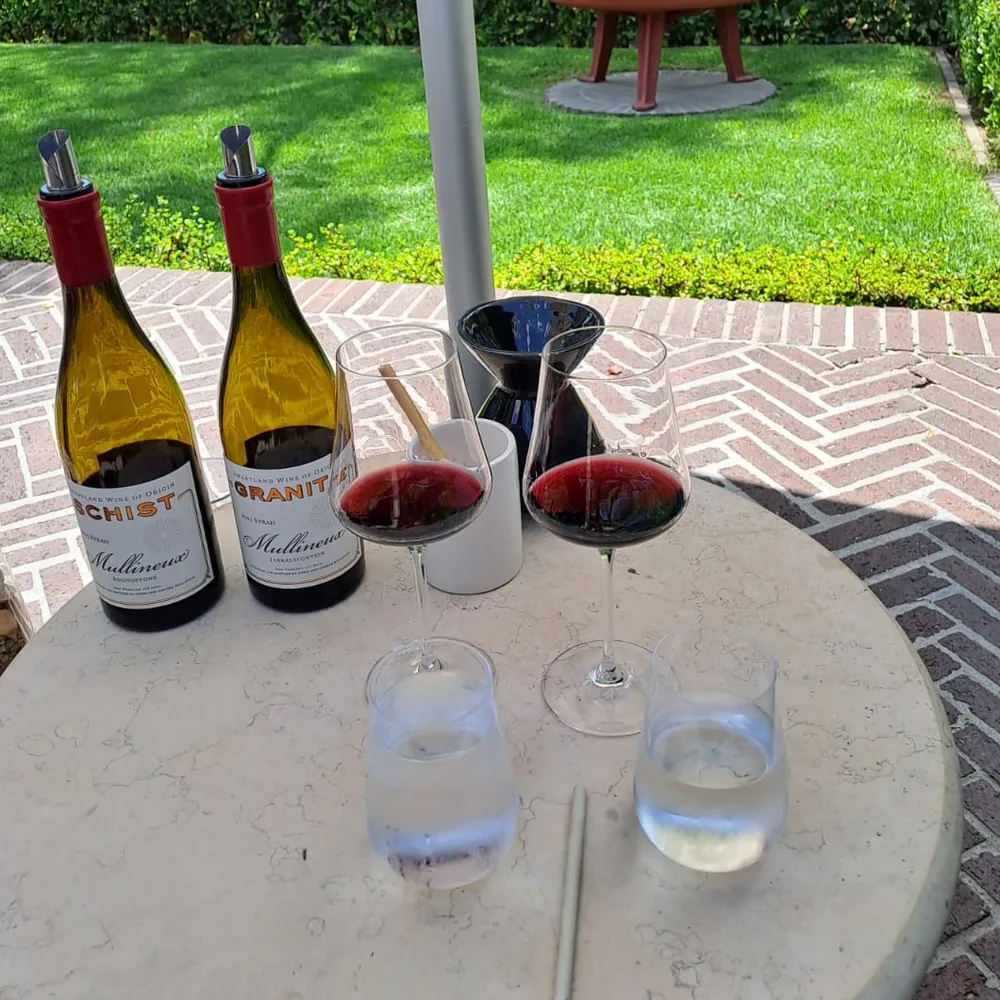
In February I visited Leeu Passant in Franschhoek, the winery on the Leeu Estates run by Mullineux & Leeu Family Wines, the partnership between Chris and Andrea Mullineux and Analjit Singh. Alongside the Leeu Passant wines they pour the Mullineux range from the Swartland, including three Syrahs each grown on a single soil: schist, granite and iron. Same grape, same vintage, same cellar, and they were plainly different wines. It sent me looking for how soil actually does that.

The short answer is that soil rarely changes flavour directly. Rock does not dissolve into the wine. What soil does is control the vine: how much water it gets, how warm its roots and grapes are, how vigorously it grows, and how deep it has to dig. Those decide how big the berries are, how fast they ripen and when they are picked, and that is what you taste.
Free-draining soils, gravel, sand, slate, keep the vine slightly thirsty: smaller berries, more concentration. Clay and chalk hold water and carry the vine through dry summers.
Stones and dark rock store the day's warmth and release it at night; pale soils reflect light onto the grapes. It matters most in cool places.
Rich soils make vigorous vines with big crops and dilute fruit. Poor soils keep yields low. Limestone is alkaline; granite and slate are acidic, which changes what the vine can take up.
Hard, fractured rock forces roots to go deep for water, which steadies the vine through drought and heavy rain alike.
Each example below shows the soil, how it works on the vine and what it does to the wine. For each, I add the growing-season climate at the vineyard (ERA5-Land, 1994 to 2023), because soil never works alone, and the words critics use for the wine far more often than for the same grape elsewhere, from 119,988 Wine Enthusiast reviews.
Stones and gravel: heat and drainage
Stony soils drain almost instantly and soak up the sun. They matter most where heat is in short supply, or where the grape needs every bit of it.
Gimblett Gravels, Hawke's Bay
About 800 ha of stony gravel left behind when the Ngaruroro River changed course after a great flood in 1867. There is almost no topsoil: water runs straight through, the vines have to be irrigated, and the stones store the day's heat. For a cool, maritime corner of New Zealand, that is the difference between ripe and unripe Syrah and Cabernet.
In the glass Syrah with a distinctly Northern Rhône feel, and Bordeaux blends that ripen fully in a region where they otherwise struggle. Critics reach for cracked pepper and blueberries.
Châteauneuf-du-Pape
Large rounded stones, carried down by the ancient Rhône, cover parts of the appellation, most famously the La Crau plateau. They soak up heat by day and give it back at night, and act as a mulch that keeps moisture in the ground beneath. Not all of Châteauneuf is stony: Château Rayas, its most famous estate, grows on sand.
In the glass Grenache that ripens fully: rich, plummy, high in alcohol, with the garrigue scrub of the southern Rhône. The sandy sites give a lighter, more perfumed Grenache.
Slate and schist: poor rock, deep roots
Broken, layered rock holds almost no water and almost no nutrients. The vine has to send its roots deep through the cracks, and it produces very little.
Priorat
Dark, crumbling slate flecked with mica that glints in the sun, on terraces so steep they are often worked by hand or mule. The soil holds so little water that roots chase moisture metres down through the fissures, and yields are tiny. A small group of growers revived the region from 1989, and it is now one of only two Spanish appellations with the top DOCa status, alongside Rioja.
In the glass Garnacha and Cariñena that are dark, concentrated and powerful, yet keep a fresh, stony edge. Critics call them “schisty” and “minerally” more than almost anywhere else.
Mosel
Slate about 400 million years old, on some of the steepest vineyards in Europe, some over 60°, mostly facing south over the river. The dark stone absorbs the sun and the river reflects more onto the slopes, which is how Riesling ripens this far north, at around 50°N. The slate drains freely and forces roots deep.
In the glass Riesling of great delicacy and low alcohol, often with a little sweetness balanced by high acidity, and notes critics describe as slate, saffron and pollen.
Limestone and chalk: water in reserve
Limestone and chalk soak up winter rain like a sponge and release it slowly through a dry summer. The vine is never parched and never flooded, and ripens slowly and evenly.
Chablis
Clay-limestone about 150 million years old, packed with fossils of a tiny comma-shaped oyster. The seven Grand Crus sit on a single slope across the Serein from the town; Petit Chablis grows on younger Portlandian limestone. The cool, water-holding marl keeps the vines steady in one of France's most northerly vineyards.
In the glass Chardonnay at its most taut and steely, with little or no new oak: citrus, green apple and a saline, oyster-shell character that is as much about cool ripening as about the rock.
Meursault and the Montrachets, Côte de Beaune
The same grape as Chablis, on limestone too, but older rock: the Côte de Beaune sits on limestone and marl of the Middle Jurassic, about 165 million years old, under brown clay-limestone soils on slopes facing east and south-east. The Grand Crus, Le Montrachet among them, sit mid-slope, where the soil is thin over the rock and drains well. On average the growing season here is only about 0.5°C warmer than in Chablis.
In the glass Richer, rounder, more textured Chardonnay than Chablis: hazelnut and butter as well as citrus, still with real tension. With so small a climate gap, much of the difference comes from the slope and the soils, and from the cellar: barrel fermentation and ageing on the lees. Critics call it opulent and generous, but also structured.
Côte des Blancs, Champagne
Chalk made of the remains of marine creatures, with only a thin layer of soil on top. It stores water through winter and feeds it to deep roots all summer, and it is soft enough to carve: the Romans' chalk pits under Reims became the crayères, the cellars where Champagne still ages at a steady cool temperature.
In the glass Chardonnay with high acidity and a fine, chalky precision, the backbone of Blanc de Blancs. Critics' words: crisp, tight, steely.
Sancerre
A rare chance to taste soil differences directly. Terres blanches are Kimmeridgian marl, like Chablis; caillottes are stony limestone; silex is flint in clay. Many growers bottle each separately, and the same Sauvignon Blanc changes with each.
In the glass Broadly: fuller and longer-lived wines from the marl, the most aromatic and early-drinking from the caillottes, and the tightest, smokiest from silex. Critics mention the soil itself in about one Sancerre review in eight.
Jerez
Brilliant white soil that soaks up the winter rains, then forms a crust in the summer sun that seals the moisture in, keeping Palomino alive through long, hot, dry summers. The soil makes the grapes possible; it does not make the sherry taste the way it does.
In the glass Sherry's nutty, toffee and bruised-apple flavours come from flor yeast, oxidation and the solera, not from the albariza. A good reminder that the cellar can speak louder than the soil.
Clay and terra rossa: the cool sponge
Clay holds water and stays cool. Grapes ripen slowly, the vine rarely suffers, and the wines tend to be broad and rich.
Pomerol
A small plateau of gravel and clay. Petrus sits on a “buttonhole” of blue clay that swells when wet and cracks when dry, holding water so the vines are never stressed. Merlot, which likes cool, moist feet, thrives here more than Cabernet.
In the glass Merlot at its most opulent: plush, powerful and rich, with fine tannins. Critics' words: opulent, powerful, concentration.
Coonawarra
A narrow strip, around 27 km long and rarely more than 2 km wide, of red clay-loam over soft limestone, with a water table beneath. The red comes from iron oxides. The topsoil drains, the limestone holds moisture, and roots reach the water below. John Riddoch planted it as a fruit colony in 1890.
In the glass Cabernet Sauvignon with cassis, fine tannins and a famous minty note. Research suggests the mint owes more to eucalyptus trees near the vines than to the soil.
Granite: acid, sandy, quick to drain
Granite weathers into coarse, acidic sand that drains fast and holds few nutrients. Vines stay small and balanced; wines tend to be fresh and aromatic rather than heavy.
Fleurie, Beaujolais
Sandy, pink, decomposed granite: acidic, poor and fast-draining. Neighbouring Morgon, on schist and volcanic rock, makes firmer, darker Gamay from the same grape a few kilometres away.
In the glass The most perfumed and silky of the Beaujolais crus, the “queen of Beaujolais”: red fruit, flowers and a fine texture.
Wachau
Austria's clearest soil rule. Riesling goes on the steep terraces of weathered primary rock, gneiss and granite, where it struggles; Grüner Veltliner goes on the deep, water-holding loess, wind-blown silt, lower down, which suits its thirst.
In the glass Tight, focused Riesling and peppery, fuller Grüner, each on the ground that suits it. Critics' words: tight, zesty.
Swartland
Three soils, and Mullineux bottle a Syrah from each. Schist, the Malmesbury shale around Riebeek-Kasteel and the Porseleinberg, is shallow, rocky and well drained, with enough clay between its layers to hold water for deep roots. Granite weathers into deep, sandy soils around the Paardeberg. Iron-rich gravels give very low yields. Many vines are old, dry-farmed bush vines, so the soil's water decides almost everything.
In the glass In the winery's own words, the schist gives dark-fruited, well-structured Syrah; the granite, pure, floral and spicy wine with nervy acidity; the iron, deep-coloured, concentrated and grippy. More broadly, critics call Swartland wines fynbos, after the local scrub.
Volcanic: young, porous, phylloxera-free
Volcanic soils are young, porous and often sandy. Some are so loose that phylloxera, the louse that destroyed Europe's vineyards, cannot survive in them.
Santorini
Almost no clay and no organic matter, and no phylloxera, so the vines grow on their own roots; some root systems are thought to be centuries old. Vines are trained into low baskets, kouloura, against the wind, and survive the dry summers on sea mist and dew.
In the glass Assyrtiko with startling acidity in a hot climate, and a salty, sea-spray character critics mention in about a third of reviews.
Etna
Black volcanic sand over lava flows of different ages, so each contrada, or named site, can differ sharply from its neighbour. Altitude does much of the cooling (see Cool places in hot regions), and many old vines are still ungrafted.
In the glass Nerello Mascalese that is pale, fine and perfumed, and Carricante that is linear and floral. Etna is called mineral in about half its reviews.
You can't taste the rock, but you can taste what it does
Rock doesn't dissolve into wine, and critics' words prove the point. In Burgundy, Chardonnay and Pinot Noir grow on the same limestone, and the same critic calls the Chardonnays mineral in 36.8% of reviews and the Pinot Noirs in just 4.7%. If the limestone had a taste, both would show it.
Yet soil changes wine enormously. Mullineux's three Syrahs share a grape, a vintage, a cellar and a winemaker, and they are wildly different. In the winery's own words, the schist is dark-fruited and well structured, the granite pure, floral and spicy with nervy acidity, the iron deep-coloured, concentrated and grippy. None of them tastes of stone. Each tastes of what its soil did to the vine: how much water it had, how hard it had to work, how much fruit it carried. Which one you love says more about your taste than about the rocks, and that is the useful part.
Find your soil
Start from the style you like, and these are the soils and places that tend to deliver it.
Taut, saline whites
Cool sites on limestone and chalk keep the vines watered but ripening slowly; Santorini's volcanic sand and sea air hold acidity even in the heat.
Rich, textured whites that stay fresh
Limestone keeps the backbone; a warm slope, some clay and barrel ageing add the weight.
Delicate, aromatic, lower-alcohol whites
Steep slate and rock terraces store the sun's heat, ripening Riesling in a cool place without piling on sugar.
Perfumed, silky reds
Granite and volcanic sand drain fast and keep vines small and balanced; Etna's altitude adds freshness.
Dark, concentrated, structured reds
Slate, schist and iron gravels starve the vine: deep roots, tiny crops, small berries with thick skins.
Plush, generous reds
Pomerol's clay keeps Merlot cool and steadily watered; Châteauneuf's stones push Grenache to full ripeness.
Savoury, peppery Syrah
Hot, free-draining stones ripen Syrah in a cool maritime climate, keeping pepper and freshness alongside the fruit.
Cabernet with fine tannins and cassis
Free-draining terra rossa over limestone, with roots that reach the water table: steady, even ripening.
Nutty, savoury, oxidative wines
Here the cellar speaks louder than the soil: flor, oxygen and time, which is also why the Argile tasted so sherry-like.
Conclusion
Read a soil on a label as a clue to style, not a flavour. Chalk and limestone point to freshness and precision, slate and schist to concentration, granite to perfume, clay to breadth, warm stones to ripeness in a cool place. Always read it alongside the climate: the same gravel that ripens Syrah in cool Hawke's Bay would bake Grenache in Priorat's heat. And when you can, taste one grower's wines from different soils side by side, as I did at Leeu Passant. It teaches more about terroir than any map.
Climate: ERA5-Land reanalysis (Copernicus Climate Change Service), hourly 2 m temperature and rainfall at each vineyard's 9 km cell, growing seasons 1994 to 2023 (April to October in the north, October to April in the south), at hand-picked vineyard coordinates; temperatures are moved from the cell's average height to the vineyards' typical height at 6.5°C per 1,000 m; days of 30°C or more are for the cell as it is. Critics' words: Wine Enthusiast tasting notes from the public “Wine Reviews” dataset (winemag-data-130k); words used distinctively more often for each place than for the same grapes elsewhere (smoothed log-odds, at least 6% of that place's reviews), with names and non-taste words removed; samples are small for some places. Minerality: the share of reviews using “mineral”, “stony”, “flint”, “chalk”, “slate” or saline words. Cross-sections are illustrations of each soil's layers as generally described, not measured profiles, and not to scale. The roots are drawn the same way everywhere, except where a soil's effect on them is well documented: threading into the cracks of slate and schist, and reaching the water table in Coonawarra. Soil descriptions are summarised from widely published sources, and for the Swartland from Mullineux & Leeu Family Wines; global soil maps were too coarse to measure these soils directly. Photos: my own.